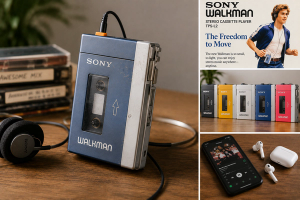
What Ever Happened to the Sony Walkman?
Before smartphones and streaming apps took over the world, the Sony Walkman was one of the most iconic gadgets on the planet. For millions of people, it completely changed how music was experienced, allowing listeners to carry their favorite songs everywhere for the very first time.
The Walkman wasn’t just a music player, it became a cultural phenomenon that shaped fashion, youth culture, travel, fitness, and the entire idea of portable entertainment. Yet despite its enormous success, the device eventually faded from mainstream relevance as technology evolved.
So what actually happened to the Sony Walkman?
Key Takeaways
- The Sony Walkman revolutionized portable music in the late 20th century.
- It popularized personal listening culture through cassette tapes.
- CD players, MP3 players, and smartphones gradually replaced it.
- Sony continued using the Walkman brand long after cassette players disappeared.
- The Walkman remains one of the most influential gadgets in tech history.
The Birth of the Walkman
Sony introduced the first Walkman in 1979, and it completely transformed the music industry almost overnight. Before the Walkman, listening to music on the go was bulky and inconvenient. Portable radios and cassette recorders existed, but they weren’t designed for private, lightweight listening.
The Walkman changed that by combining compact cassette playback with lightweight headphones in a truly portable device. Suddenly, people could listen to music while walking, commuting, exercising, or traveling.
At the time, the idea of carrying your personal soundtrack everywhere felt revolutionary.
A Cultural Icon of the 1980s
The Walkman quickly became much more than just a gadget. It became a symbol of modern lifestyle and individuality during the 1980s.
People created mixtapes, shared music collections, and spent hours carefully selecting songs for different moods and moments. Wearing headphones in public also became more socially normal because of the Walkman’s popularity.
The device influenced everything from fitness culture to fashion trends, appearing constantly in movies, advertisements, and pop culture throughout the decade.
For many people, the Walkman represented freedom and personal space in a noisy world.
The Evolution Beyond Cassette Tapes
As technology advanced, Sony adapted the Walkman brand to newer formats. Cassette-based Walkmans eventually evolved into:
- CD Walkmans (Discman)
- MiniDisc players
- MP3 Walkmans
- Digital media players
Sony tried to keep the brand relevant by continuously updating the technology while maintaining the recognizable Walkman identity.
However, competition became increasingly intense, especially during the rise of digital music.
The iPod Changed Everything
One of the biggest turning points came in 2001 when Apple introduced the iPod.
The iPod offered massive digital music storage, sleek design, and seamless integration with iTunes, making it far more convenient than carrying physical tapes or CDs. Instead of manually changing discs or cassettes, users could instantly access thousands of songs digitally.
While Sony had dominated portable music for decades, it struggled to adapt quickly enough to the digital era. Apple rapidly became the new leader in portable music technology.
The rise of streaming services and smartphones later accelerated the decline of standalone music players even further.
Did the Walkman Actually Disappear?
Surprisingly, no — the Walkman never fully disappeared.
Sony still uses the Walkman name today for premium digital audio players aimed at audiophiles and music enthusiasts. Modern Walkman devices focus on high-quality sound performance rather than mass-market portability.
These newer models are far more advanced than the original cassette players, supporting high-resolution digital audio and modern streaming features.
However, they now serve a much smaller niche audience compared to the Walkman’s massive mainstream popularity during its peak years.
Why the Walkman Still Matters
Even though smartphones replaced most standalone music players, the Walkman’s impact on technology and culture remains enormous.
The device helped establish several ideas that still shape modern tech today:
- Portable personal entertainment
- Private listening culture
- Music mobility
- Lifestyle-focused gadgets
- Emotional connection to technology
In many ways, today’s smartphones inherited the role the Walkman originally pioneered decades ago.
Conclusion
The Sony Walkman may no longer dominate pop culture the way it once did, but its legacy still lives on in nearly every portable device people use today.
It changed how the world listened to music, turning personal audio into an everyday experience and paving the way for modern portable entertainment.
While cassette tapes and wired headphones may feel nostalgic now, the Walkman remains one of the most influential gadgets ever created, a device that didn’t just play music, but completely changed how people connected with it.