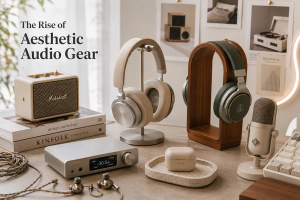
The Rise of Aesthetic Audio Gear
Audio devices are no longer just about sound quality, they’ve become fashion statements, lifestyle accessories, and part of personal identity. From transparent earbuds and retro headphones to minimalist speakers and colorful mechanical-inspired designs, aesthetic audio gear has exploded in popularity across social media and modern consumer culture.
Today’s buyers want products that not only sound good but also look visually appealing on desks, in outfits, and across Instagram or TikTok feeds. As technology and design increasingly merge, audio gear has evolved into a reflection of personal taste and online aesthetics.
Key Takeaways
- Consumers now value design and style almost as much as sound quality.
- Social media has played a major role in popularizing aesthetic tech products.
- Transparent, retro, minimalist, and colorful designs are trending in audio gear.
- Brands are targeting younger audiences through lifestyle-focused marketing.
- Audio products are becoming part of fashion and self-expression culture.
Audio Gear Became a Lifestyle Product
For years, headphones and speakers were marketed primarily around technical specifications like bass performance, battery life, and sound clarity. While those features still matter, design has become equally important for modern consumers.
People now carry earbuds everywhere, wear headphones in public daily, and display speakers in carefully designed home setups. As a result, audio devices have become visible lifestyle products rather than hidden electronics.
Many buyers want their tech accessories to match their room aesthetics, fashion style, or online personal brand.
Social Media Changed Consumer Preferences
Platforms like TikTok, Instagram, Pinterest, and YouTube have heavily influenced the rise of aesthetic audio gear. Clean desk setups, “what’s in my bag” videos, productivity content, and lifestyle influencers frequently showcase visually appealing tech products.
A pair of stylish headphones or uniquely designed speakers can quickly become viral online, especially when combined with trendy aesthetics like:
- Minimalism
- Y2K-inspired design
- Transparent tech
- Retro electronics
- Soft pastel color palettes
- Cyberpunk-inspired lighting
Visual appeal now plays a huge role in purchasing decisions, especially among younger audiences.
The Popularity of Transparent and Retro Designs
One of the biggest trends in modern audio gear is transparent design. Brands have embraced see-through earbuds, exposed internal components, and futuristic industrial styling that gives products a more distinctive look.
At the same time, retro-inspired audio gear has also become incredibly popular. Vinyl-style speakers, vintage headphones, cassette-inspired accessories, and analog aesthetics appeal to consumers seeking nostalgia in modern technology.
This blend of old-school inspiration and modern functionality has become a major part of aesthetic tech culture.
Functionality Still Matters
Despite the emphasis on design, consumers still expect strong performance. Aesthetic products that fail in sound quality or usability rarely maintain popularity for long.
Successful audio brands balance visual identity with features like:
- Noise cancellation
- Long battery life
- Comfortable fit
- High-quality microphones
- Wireless connectivity
- Custom sound profiles
The most successful products combine stylish design with practical everyday performance.
Brands Are Selling Identity, Not Just Technology
Modern audio companies increasingly market their products through emotion, identity, and lifestyle rather than technical language alone.
Advertisements now focus less on audio specifications and more on experiences: studying in cozy cafes, traveling through cities, relaxing at home, or expressing individuality through design.
Consumers are not just buying headphones anymore, they’re buying a certain aesthetic, mood, or version of themselves.
This shift reflects a larger trend where technology becomes deeply tied to personal branding and online culture.
The Influence of Creator and Desk Setup Culture
The rise of remote work, gaming, streaming, and creator culture has also fueled demand for aesthetic audio gear. Content creators and streamers often build visually coordinated setups where every product contributes to the overall look.
Headphones, microphones, speakers, and earbuds now appear as part of curated digital spaces designed for both productivity and visual appeal.
As people spend more time online and on camera, aesthetic tech products have become part of creating an attractive digital environment.
Conclusion
The rise of aesthetic audio gear reflects how technology is increasingly blending with fashion, design, and identity. Consumers no longer want electronics that simply function well, they want products that feel personal, stylish, and visually expressive.
Social media, creator culture, and lifestyle branding have transformed headphones and speakers into cultural accessories rather than purely technical devices.
As design continues becoming more important in consumer tech, aesthetic audio gear will likely remain one of the strongest examples of how modern technology is evolving beyond utility into self-expression.