5 Risks of Relying Too Much on AI
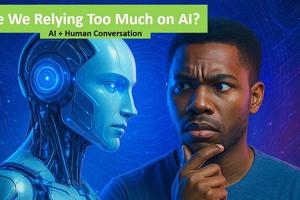
Artificial intelligence has transformed the way people work, communicate, and solve problems. From virtual assistants and automated customer support to advanced data analysis and content creation, AI has become deeply integrated into modern life. While these technologies offer incredible convenience and efficiency, relying too heavily on AI also comes with important risks that individuals, businesses, and society must carefully consider.
As AI continues to evolve, maintaining a balance between automation and human oversight becomes increasingly important. Here are five major risks of relying too much on artificial intelligence.
Key Takeaways
- Overdependence on AI can reduce critical thinking and problem-solving skills.
- AI systems may produce inaccurate or biased results.
- Increased automation can lead to job displacement in certain industries.
- Privacy and data security concerns continue to grow with AI adoption.
- Heavy reliance on AI can reduce human connection and creativity.
Reduced Critical Thinking and Decision-Making Skills
One of the biggest risks of excessive AI reliance is the gradual decline of human critical thinking skills. As AI tools become more capable of answering questions, generating ideas, and automating decisions, people may become less inclined to think independently or analyze information carefully.
For example, relying entirely on AI-generated summaries, recommendations, or solutions can discourage deeper understanding and problem-solving. Over time, this dependency may weaken creativity, analytical reasoning, and the ability to make informed judgments without technological assistance.
While AI can enhance productivity, it should support human thinking rather than replace it entirely. Maintaining active engagement in decision-making processes remains essential for both personal and professional development.
AI Can Produce Inaccurate or Biased Information
Although AI systems are powerful, they are not always accurate. AI tools rely on data, algorithms, and training models that can contain errors, outdated information, or hidden biases.
In some cases, AI-generated content may sound highly convincing while still being factually incorrect. This can create serious problems in fields like healthcare, finance, education, and journalism, where accuracy is critical.
Bias is another major concern. If AI systems are trained on biased datasets, they may unintentionally reinforce stereotypes or unfair practices. This can affect hiring decisions, loan approvals, law enforcement technologies, and other sensitive areas.
Human oversight remains crucial to verify AI-generated outputs and ensure fairness, transparency, and accountability.
Job Displacement and Workforce Disruption
Automation powered by AI is changing the job market rapidly. While AI creates new opportunities in technology and innovation, it can also replace certain tasks previously performed by humans.
Industries such as customer service, manufacturing, transportation, and data entry are already experiencing increased automation. As AI systems become more advanced, some workers may struggle to adapt to changing job requirements or face unemployment in heavily automated sectors.
This shift highlights the importance of reskilling and education. Workers and organizations must continuously adapt to evolving technologies and focus on developing skills that AI cannot easily replicate, such as emotional intelligence, leadership, creativity, and complex problem-solving.
Balancing technological advancement with workforce support will be one of the defining challenges of the AI era.
Privacy and Security Concerns Are Growing
AI systems often rely on large amounts of personal data to function effectively. From smart devices and online shopping habits to facial recognition and health tracking, AI technologies collect and analyze enormous volumes of information.
This raises serious concerns about privacy, surveillance, and data protection. If sensitive information is mishandled, leaked, or accessed by malicious actors, individuals may face identity theft, financial fraud, or loss of personal privacy.
Cybersecurity risks also increase as AI tools become more integrated into critical systems. AI-powered cyberattacks and deepfake technologies are making digital threats more sophisticated and difficult to detect.
As AI adoption expands, stronger regulations, ethical standards, and security measures are essential to protect users and maintain trust.
Loss of Human Connection and Creativity
AI can automate communication, generate content, and simulate human interaction, but it cannot fully replace genuine human connection. Overreliance on AI-driven interactions may reduce face-to-face communication, emotional understanding, and authentic social experiences.
For example, businesses that rely entirely on AI chatbots for customer service may lose the personal touch that builds trust and loyalty. Similarly, excessive dependence on AI-generated art, writing, or music could reduce opportunities for human creativity and originality.
Human emotions, empathy, intuition, and lived experiences remain qualities that technology cannot truly replicate. AI should enhance creativity and communication rather than diminish the value of human expression and relationships.
Final Thoughts
Artificial intelligence offers tremendous benefits, but relying on it too heavily can create significant challenges. From weakened critical thinking and biased information to privacy concerns and workforce disruption, the risks associated with AI require careful attention and responsible use.
The goal should not be to avoid AI altogether, but to use it thoughtfully and ethically while preserving human judgment, creativity, and connection. By maintaining a healthy balance between technology and human involvement, society can benefit from AI’s potential without losing sight of the values and skills that make people uniquely human.